In Retrospect with Lionel Lassalle Leijoncrona - Founder & CEO of Soulcircus - and Future Hopes for the World
From a small French town to the whirlwind of the global music industry, and eventually to a quieter search for meaning, Lionel's path has been anything but linear. Today, as an entrepreneur and a lifelong student of personal growth, he channels everything he has learned into Soulcircus — a platform devoted to holistic wellness and human connection. Below, Lionel shares the moments, the wake-up calls, and the people who shaped him, and offers a glimpse of the vision he hopes to build with all of us.
Growing up and spreading my wings
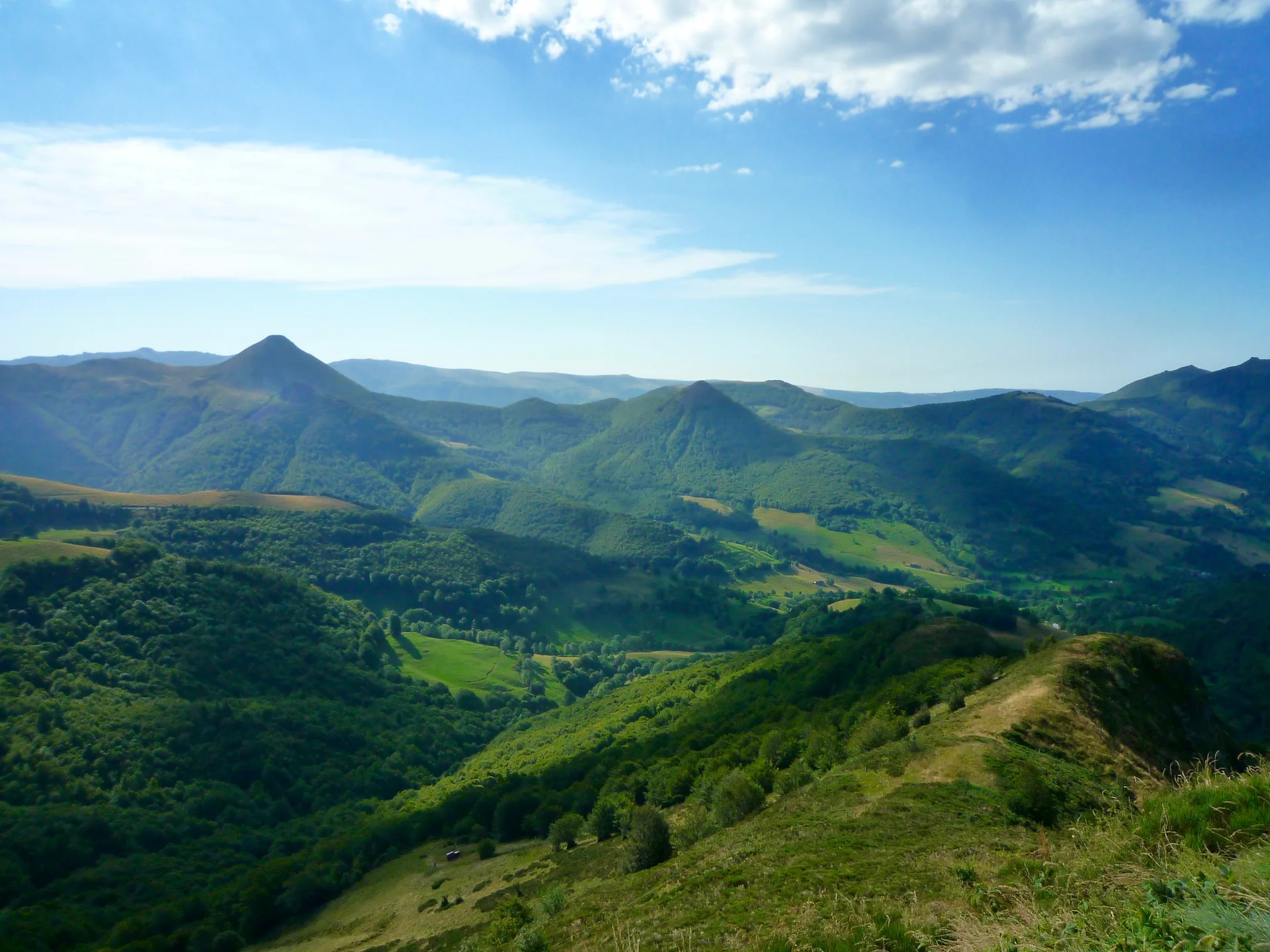
I was born and raised in the French countryside, in a small town of about four thousand people tucked into the center of the country, just south of the middle. The region is volcanic — I like to say I was born on the slopes of one, part of the oldest and largest chain in Europe. My childhood was made of grasslands, wilderness and mountains. It could feel a little rough at times, but it was beautiful, and it taught me to love nature deeply.
When I finished my studies, I moved to Paris, and the contrast couldn't have been sharper. I started working in the music industry — first at Virgin Records, then at Jive Records as a product manager — and honestly, I felt like a foreigner in my own country. People around me were speaking verlan, a Parisian slang where you flip the syllables of words, and I understood maybe every other sentence. Everything was new, a little overwhelming, and endlessly exciting.
Work hard and play hard
I was only 23 when my boss handed me responsibility for some of the biggest global releases of that era — George Michael, David Bowie, Iggy Pop, Britney Spears, Justin Timberlake, the Backstreet Boys, NSYNC, Robyn, and many more. I was mesmerised by that world, by the artists, by everything I was learning. But after a few years of very intense work, something started to give.
It took me years to land from that experience. I didn't yet have the tools or the daily practice to help my mind hold so much pressure, stress and responsibility.
Do you remember Charlie Chaplin in Modern Times, screwing bolts on the assembly line? That's exactly how it began to feel — alienated from the very work I loved, with no space left to appreciate the creativity, the teamwork, the heart we were pouring into it. I was successful, but I could feel myself heading toward burnout. I knew something had to change.
A new country and a fresh start
So I moved to Stockholm with my Swedish girlfriend, hoping for a slower, more balanced life. Like many others, I came for love — and stayed for the love I developed for Sweden itself. That love has only deepened over time. I've always felt I could be more fully myself here. People respect each other's boundaries. Thinking differently is met with curiosity rather than judgment. I love how Swedes keep their traditions alive, how close to nature they remain, how much value they place on gender equality, gentleness, and quiet awareness. There's less corruption, more transparency, and a flat hierarchy at work that makes innovation feel possible at any level. It also felt like a good place to start a business.
I arrived just as the music industry was entering its crisis. So I began asking myself what else I loved. Traveling was near the top of the list. Not long after, I joined Air France — right as it was merging with KLM.
Becoming an entrepreneur
Working on the e-commerce and social media team at Air France KLM, I slowly discovered I was something of an "intrapreneur." Ideas kept spilling out of me — campaigns, initiatives, new ways of doing things. After eleven years, I felt the pull to strike out on my own, to create something that could benefit more people in a more direct way.
It was a huge leap. I'd been an employee for fifteen years, with a stable life. I knew almost nothing about software development, and I had no capital to speak of. But something in me kept saying: it's time to fly.
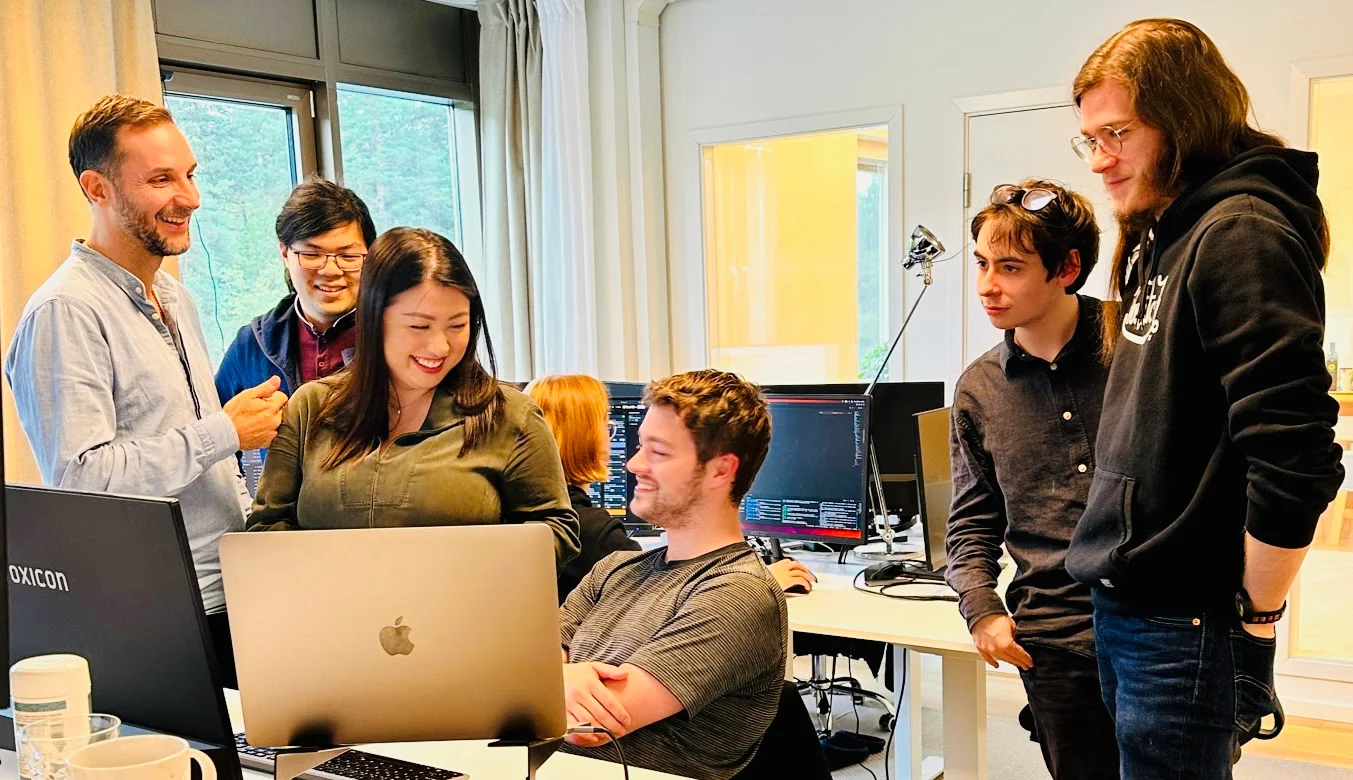
Years later, after a proper roller coaster of obstacles, small victories and long nights, I can say I've learned more than I ever imagined. The single biggest gift of the journey has been the people — the extraordinary team I get to build alongside. Even in the hardest moments, I've felt I was on the right path.
Finding my way and the yogi life
I've been drawn to yogis and mystics for as long as I can remember. When I was thirteen, my mother mentioned that a yoga class had started in our little village, in a former chapel. This was 1989 — yoga was far from mainstream, and to this day I have no idea how a teacher ended up there. I went once, and I was hooked. I kept going every week.
Yoga helped me handle the stresses of school and everyday life. My posture improved, and so did something quieter — a sense of well-being I hadn't known I was missing. Wherever life took me after that, yoga followed. Finding a studio became one of the first things I did in any new place.
Around eighteen, I discovered the writings of Alexandra David-Néel, the 19th-century French explorer. Her accounts of travels through the then-forbidden regions of Tibet, India and the Himalayas — and her descriptions of the yogis she met there — completely captivated me.
Then, during a trip to Bali, I nearly lost my leg to a tropical infection. That was the wake-up call I needed — the moment I understood my wandering had to find a meaningful direction.
A wake up call, practice and meditation
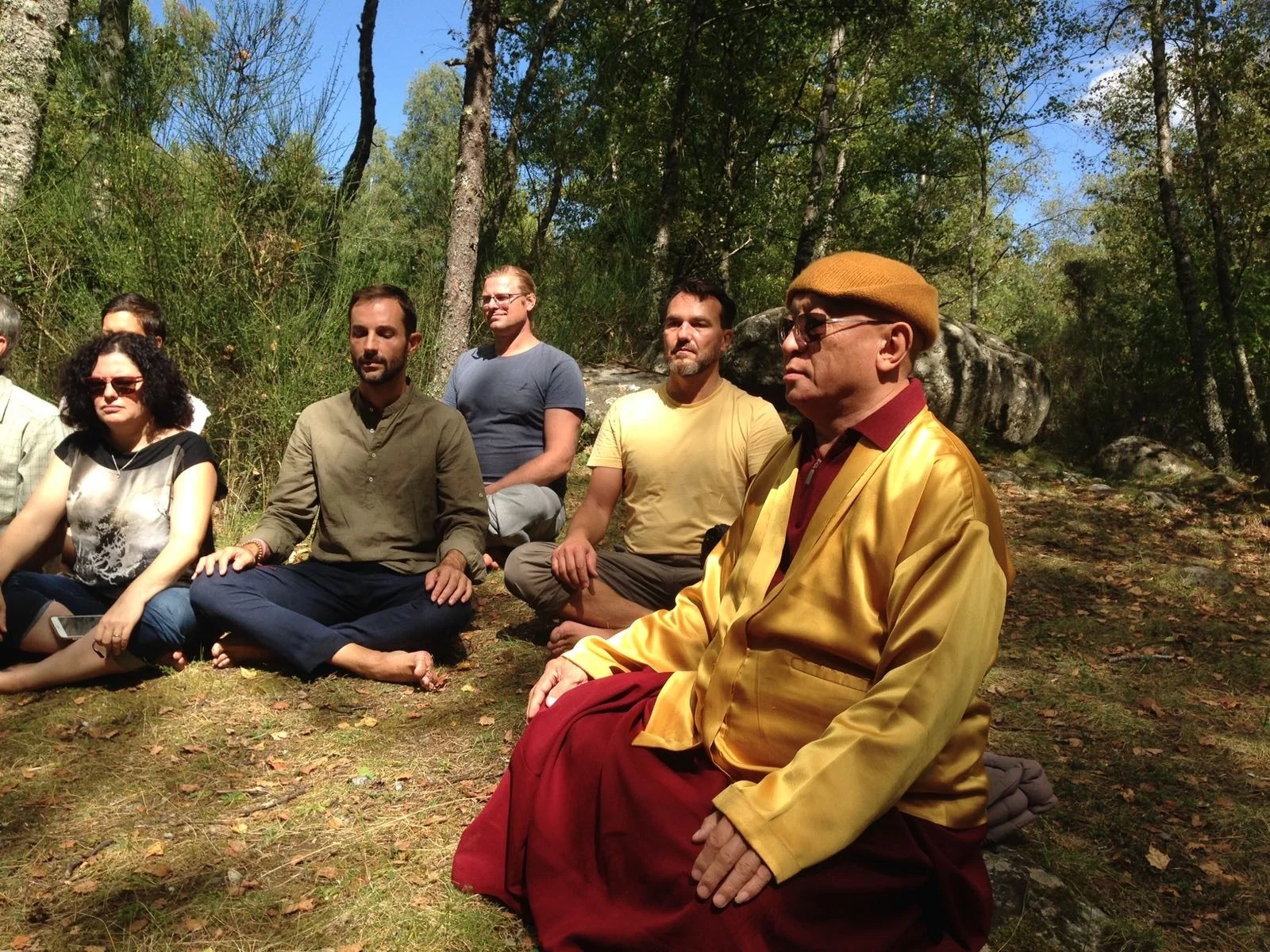
A couple of years later, I was invited — along with my mother and brother — to a Tibetan Buddhist monastery a couple of hours from where I lived in France. That was where I was properly introduced to meditation. A traditional retreat of 3 years, 3 months and 3 days was about to begin at the monastery, and I found myself asking anyone who would listen about what it meant. I started reading, asking questions of the few practitioners I met, letting curiosity guide me. Nothing dramatic happened for a long time — until I turned thirty, the year my son was born.
Working at an airline meant traveling constantly, and everywhere I went, I kept bumping into Buddhist traditions and the practices I'd been circling around for years. But I hadn't yet committed to any of it. Then came Bali, and the infection that nearly took my leg. That was the wake-up call. I was navigating a difficult relationship at the same time, struggling with emotions I didn't know how to hold, and I felt very clearly that I needed guidance.
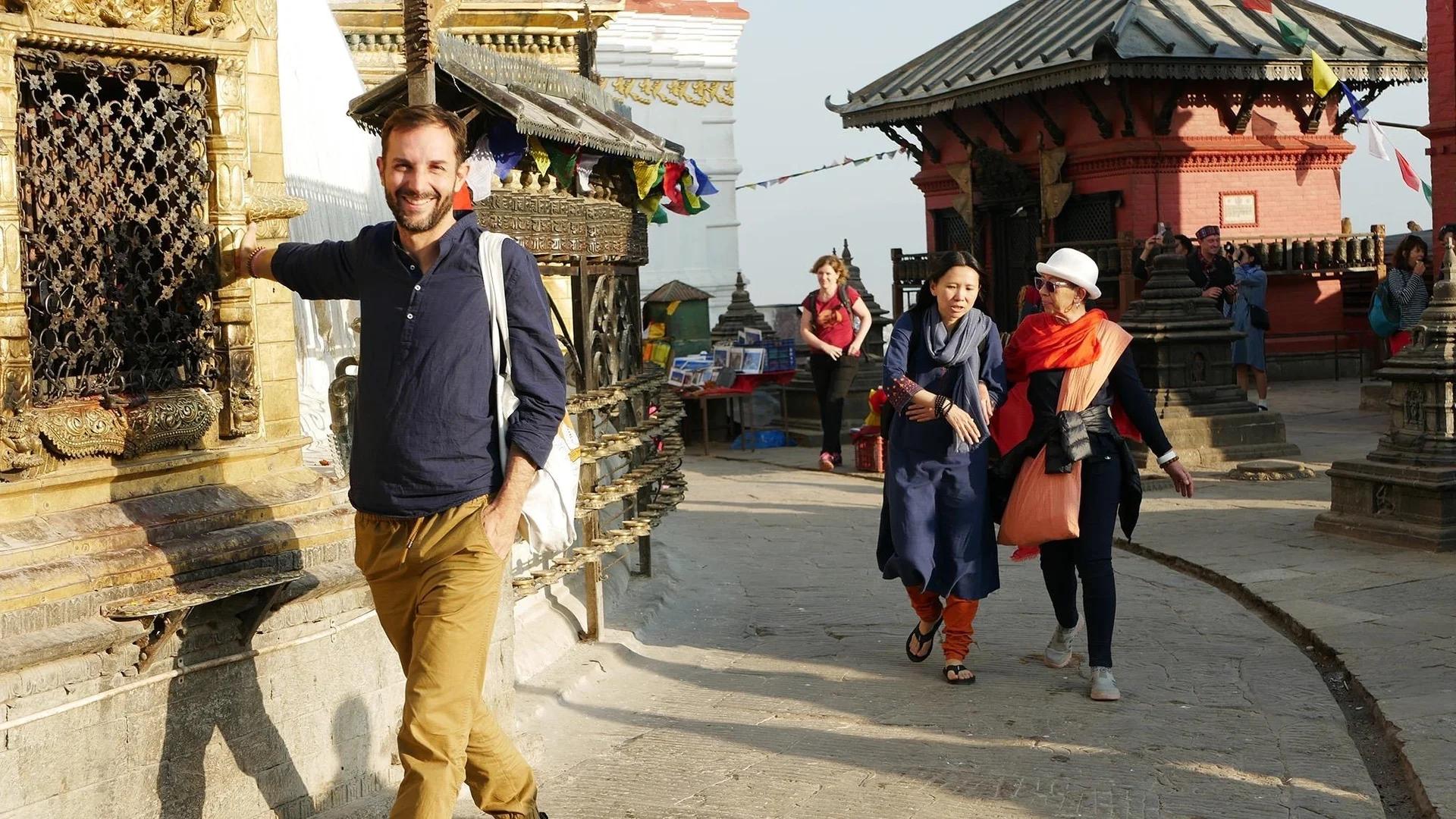
So I decided to go to the source, and to find a qualified teacher. A dear friend pointed me toward Nepal. The first time I sat down and listened to the person who would become my teacher, it felt like love at first sight. I was finally hearing the wisdom I had been searching for all my life.
Building a community and sacred space
From 2010 onward, I attended many meditation and Buddhist philosophy retreats, doing my best to actually live what I was learning. Around that time, I was invited to join the volunteer team creating Tara's Triple Excellence — an online study and practice program covering the entire Buddhist path, designed so anyone could practice at home, with occasional in-person gatherings. Today, that program is followed by thousands of students around the world.
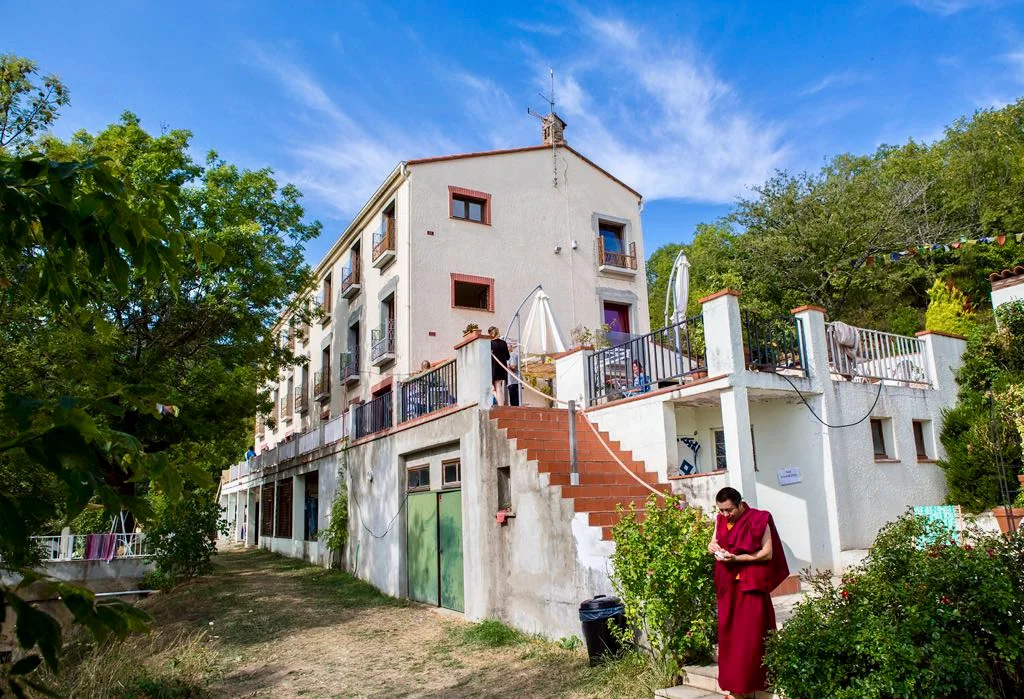
A few years later, my teacher wanted to create a retreat center in France. We searched together for a remote and beautiful place, and eventually found one in the Pyrenees. We acquired the land, began the long renovation, and I was entrusted with leading the development of what would become an international retreat center. It was an honor I accepted with my whole heart. One of our goals was to prepare the site for the traditional 3-year retreat — a goal we reached in 2023, when the first cycle began with fifteen participants from very different walks of life. The center now welcomes up to 200 people for seminars, and hosts retreats ranging from a few days to several months.
But we quickly realized how hard it was to share these events with the people who might most need them. A website could only do so much. I began to imagine a dedicated platform — a place where practices like these could actually be found. That was one of the first seeds of Soulcircus.
Why Soulcircus and for whom?
I believe most of us are, in some way, on a quest — to know ourselves more deeply, to heal what needs healing, and to live in fuller connection with who we truly are. And I've come to trust that there are ancient tools and traditions, often quiet and overlooked, that can guide us home to ourselves.
Just two decades ago, yoga was almost unheard of in Sweden. Today, there's a studio in every neighborhood. Meditation felt intimidating to most people five years ago; today it's practiced in schools, hospitals and boardrooms around the world.
Soulcircus was born from a simple wish: to make wellness practices — both ancient and modern — easier to discover. We want to connect you with the teachers and practitioners who have something meaningful to share, and we want them to be able to find each other, too. Whether you already have a practice you love, or you're curious and just starting to look, we hope Soulcircus feels like a warm and open space to explore.
We know that growth looks different for everyone. That's why we've tried to gather a wide range of practices, so that whatever your path is, you can find something on Soulcircus that fits.
Work-life balance and avoiding burnout
Life can be genuinely hard in our fast-moving societies. Most of us have watched a friend, a family member, or a colleague go through anxiety, burnout or depression — and many of us have lived those states ourselves. I certainly have. But I've also learned that with the right tools and support, it's possible to move through those seasons with more steadiness and less suffering.
That belief inspired Soulcircus @work, our offering for companies and organizations that want to bring wellness practices into their teams. Our aim is to make it simple for them to find qualified teachers and practitioners, and to give employees real, sustaining tools rather than surface-level fixes.
Our hope is to help people become the best versions of themselves — and, in doing so, to have a gentle, positive impact on the world around them.
Connecting people and contributing to society
Soulcircus isn't only about finding practices that resonate with you. It's also about the community around those practices — the sense of not being alone on the path. We want to help people grow, and we want that growth to ripple outward into their families, their workplaces, and their communities.
There's a growing awareness that we are more interconnected than we sometimes remember. Our actions, our words, even our thoughts, travel further than we imagine. I believe we're only beginning to understand how much power that gives us — collectively — to shape a kinder world.
Envisioning the future
My hope is that more people will find the practices that speak to them — practices that help them heal, find balance, and become a little more themselves. Each of us needs something different, and I love the idea of Soulcircus as a kind of smorgasbord: a place where you can choose what nourishes you at this particular moment of your life, knowing that moment will change and evolve.
I also hope Soulcircus becomes a place where more teachers and practitioners can share what they know, and where their gifts can reach the people who need them.
More than anything, I wish for everyone to find the tools that help them keep walking their own path toward wellness and fulfillment. If we do that together, I truly believe we can build a more connected, more compassionate world.
With warmth, Lionel
Discover hundreds of wellness guides and events
From breathwork to sound healing, yoga to meditation. Find what resonates with you.
Explore Soulcircus →